






















Case studies
Partial Discharge Monitoring Early Slot Discharge Detection
Our Customer’s Challenge
At a waste-to-energy facility in Poland, the newly installed 10 MVA, 11 kV generator replaced a previous unit that had failed due to insulation breakdown caused by partial discharges (PD). While PD is a normal phenomenon in high-voltage machines, even subtle activity can signal earlystage defects that, if undetected, may evolve into critical insulation failures.
The facility team faced the challenge of ensuring that the new generator would operate reliably from the outset. Particular concern centred on slot discharges in the stator bars, which can cause localised mechanical and thermal erosion of the insulation. Among insulation deterioration mechanisms, slot PD is widely regarded as the fastest route to generator failure. Detecting these discharges in a newly commissioned machine is especially difficult, as activity levels are often low and easily overlooked.
Without continuous monitoring, maintenance decisions would rely on periodic offline testing or inspections, which could miss transient or load-dependent discharge events. The operator therefore required a solution that could provide early, real-time detection of emerging slot discharges and deliver actionable insights into the insulation condition. This would support a proactive maintenance strategy to safeguard generation capacity, prevent unplanned downtime, and avoid the significant costs associated with forced outages or major unplanned repairs.
The Quartzteq Solution
Before commissioning the new generator, the client evaluated several online partial discharge monitoring systems to ensure early detection of potential insulation issues. Based on technical performance, reliability, and proven experience in high-voltage applications, they identified the LIFEVIEW® PDA II for its ability to continuously track PD activity, detect subtle slot discharges, and support a proactive maintenance strategy.
The system was installed on the newly commissioned 11kV generator using QCC12 coupling capacitor sensors, providing sensitive measurements of PD activity across all three phases.
Once operational, the PDA II immediately began delivering continuous, real-time monitoring, capturing variations in PD behaviour associated with changes in load, temperature, and operating conditions. Low-amplitude, asymmetrical PD patterns indicative of slot discharges were detected early, giving engineers the ability to distinguish between normal, inherent PD phenomena and potentially damaging defects in the stator bar insulation.
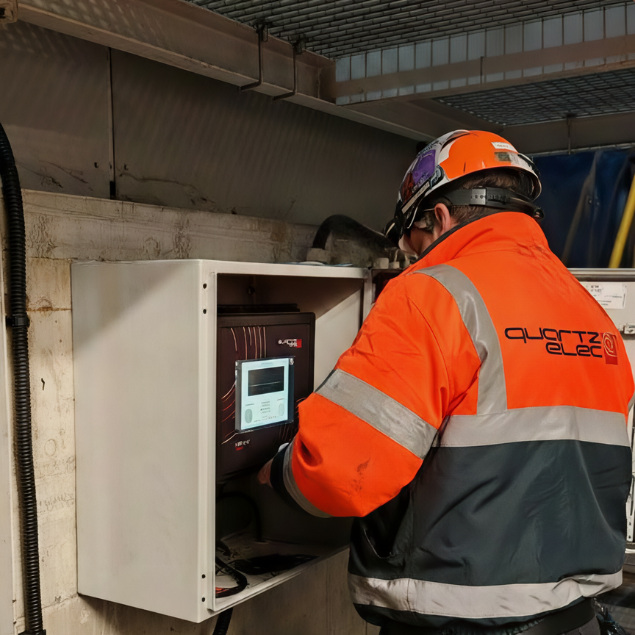
The system also recorded detailed, phase-resolved patterns, discharge magnitudes, and cumulative activity to establish a baseline and create ongoing trend data. A key advantage for the operating team was the built-in display, which allowed straightforward, on-site inspection of machine insulation health without the need for external software or specialist tools. This enabled rapid interpretation of PD behaviour during commissioning and early operation, supporting informed decision-making directly at the machine.
By providing this real-time, detailed visibility into slot discharge activity, the LIFEVIEW PDA II allowed the operator to detect early-stage insulation defects immediately after commissioning, ensure reliable operation under varying operational conditions, and implement a proactive maintenance approach that significantly reduced the risk of unexpected downtime while safeguarding generation capacity
Key Benefits
- Minimised risk of insulation failure: Early detection of slot discharges prevents insulation breakdown, protecting the new generator from costly damage.
- Reliable, uninterrupted power generation: Continuous monitoring under real operational conditions ensures the generator delivers consistent output without unexpected downtime
- Optimised maintenance planning: Predictive insights allow the facility to schedule targeted inspections and interventions, saving time and maintenance costs.
- Extended equipment lifespan – Proactive management of early-stage defects reduces thermal and mechanical stress on the stator insulation, supporting long-term generator reliability.
#UnparalleledInEngineeringServices
Follow us on Facebook, X & LinkedIn
CS113
Connect with us


Quartzelec is proud to be certified by: